Our programs
Programs and activities
A shared mission, different community settings
The purpose of Manassas Therapy Dogs is to offer pet therapy to the citizens of Manassas and the surrounding communities in Northern Virginia. Our multi-faceted goal is to provide comfort and a brief distraction to people in nursing, rehabilitation and adult care facilities, and to provide support to elementary students' literacy programs, at college campus de-stressing events and other special opportunities that may arise.
All our teams are certified through the Alliance of Therapy Dogs. The service areas below reflect our mission, alongside practical considerations for organizations exploring a visit.
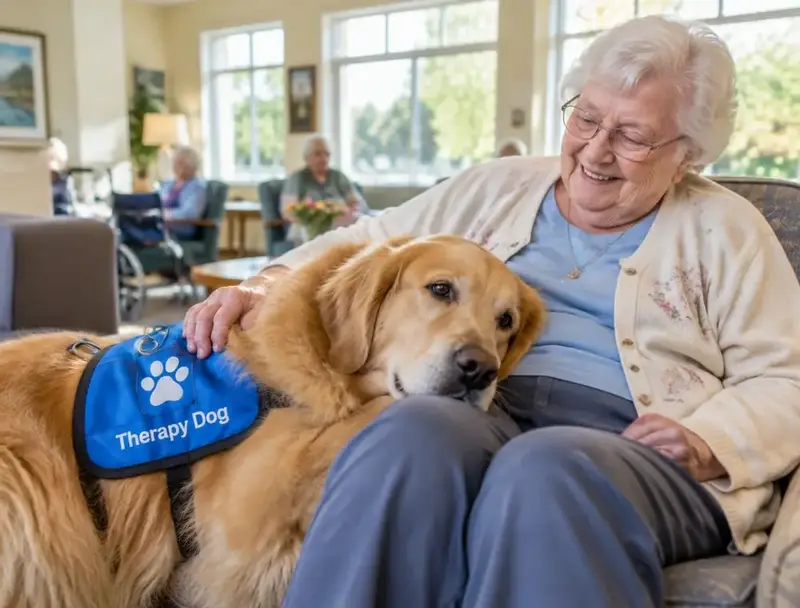
Comfort in nursing, rehabilitation, and adult care facilities
Our mission includes offering comfort and a brief distraction to people in nursing, rehabilitation, and adult care facilities. A friendly encounter with a dog can create space for conversation, quiet company, or a change of pace within a person's day.
For an organization exploring a visit, the starting point is the people in its care. Consider whether residents would prefer individual greetings or a shared space, how people can choose not to participate, and what staff support would be available. Animal policies, accessibility, allergies, and infection-control guidance should be discussed before any visit is arranged.
Pet therapy is companionship, not medical treatment. A visit should complement the setting's existing care and routines, rather than replace them or promise a particular health outcome.
When you inquire: Share the type of care setting, the intended participants, available space, and any facility rules that visiting teams would need to follow.
Support for elementary students' literacy programs
Supporting elementary students' literacy programs is part of our mission. In a reading-focused therapy dog setting, the dog can be a calm listener while a child practices reading aloud. The emphasis is on a welcoming experience, not on the dog assessing a child's reading skills.
Educators considering this kind of activity can think about suitable books, the reading space, student supervision, and how participation fits with their existing literacy work. Children should have the choice to take part, observe from a comfortable distance, or continue with an activity that does not involve the dog.
A therapy dog does not replace a teacher, reading specialist, or individualized learning support. Reading activities should remain guided by the school's educational goals and the needs of each student.
When you inquire: Tell us about the students' age group, the literacy activity you have in mind, supervision, and your school's policies for animal visits.

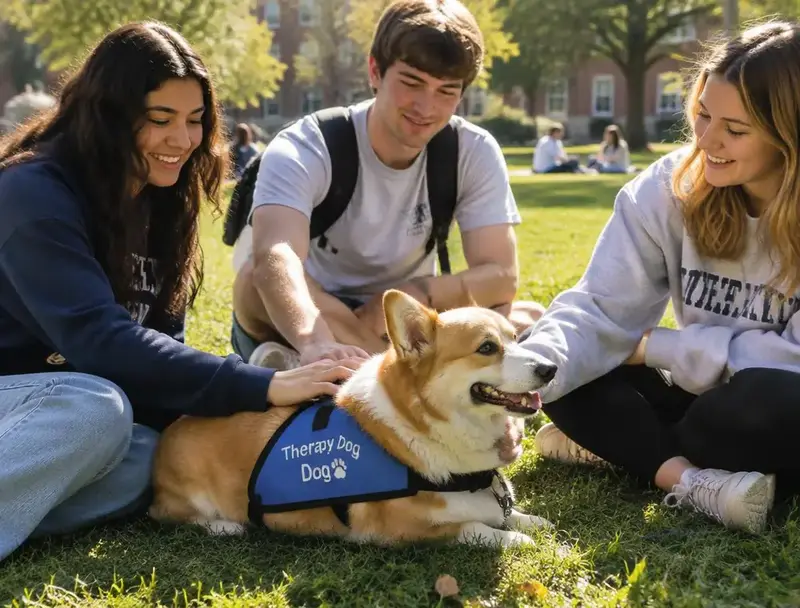
College campus de-stressing events
Our mission also includes support at college campus de-stressing events. These activities offer students an opportunity to step away from a busy day and enjoy a friendly interaction with a dog and handler.
When planning a campus event, consider how students will enter and leave the activity, how to avoid crowding around a dog, and whether the location offers a quieter area for breaks. A welcoming event also makes room for students who do not want to interact with animals or who have allergies or fears.
A therapy dog encounter is not counseling or crisis support. Campus organizers should keep their usual student support services available and avoid presenting the event as a substitute for mental health care.
When you inquire: Include the campus location, the event's purpose, the expected attendance, and the staff member coordinating the activity.
Special opportunities in the community
Our mission leaves room for other special opportunities that may arise in Manassas and the surrounding Northern Virginia communities. Organizations with an idea can begin by explaining whom they hope to reach and why a therapy dog interaction would suit the setting.
Not every gathering is appropriate for a dog visit. Noise, crowd size, weather, access to a calm space, and the needs of participants and dogs all matter. Exploring an idea starts a conversation; it does not confirm that a particular event or location can be accommodated.
A clear description of your event is more useful than a broad request. Explain the activity, the people involved, the proposed setting, and any restrictions so the organization can understand what you are asking for.
When you inquire: Describe your community organization, the proposed opportunity, the audience, and any dates or location details you already have.
Planning a therapy dog visit
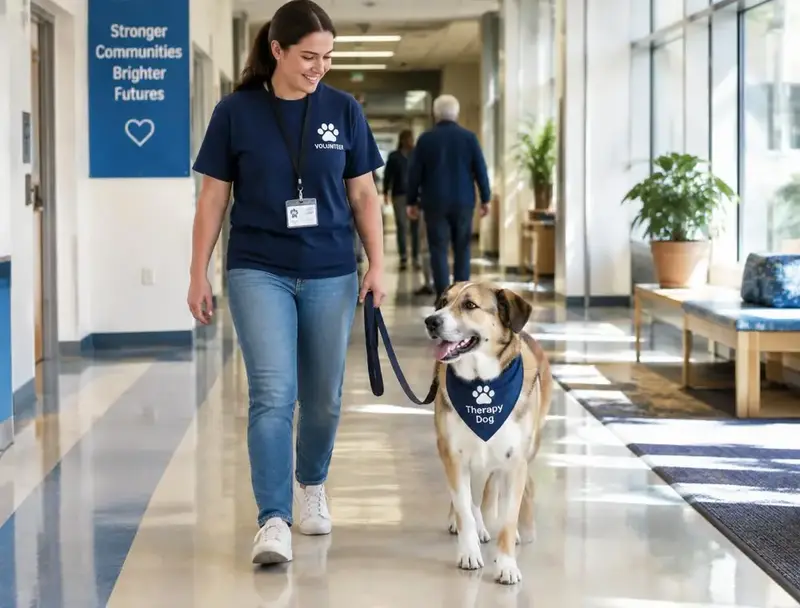
A thoughtful request helps start a useful conversation. These general planning steps can help a school, care facility, campus, or community organization prepare an inquiry.
- 01
Define the purpose
Identify who the visit is for and what kind of interaction would fit: quiet companionship, a reading activity, or a campus event. Include the setting and the approximate number of participants.
- 02
Check your setting's requirements
Ask about permission for animals, accessibility, allergies, cleaning and hand hygiene, and any documentation your organization requires. Choose a space with room for people and the dog to move comfortably.
- 03
Send your request
Use the application to introduce your organization and describe the visit you are considering. Include proposed dates if you have them, along with any important restrictions. Submission is an inquiry, not a confirmed booking.
- 04
Discuss arrangements before announcing a visit
Before inviting participants, establish the agreed location, timing, staff contact, and participation arrangements with the organization. Do not assume availability or advertise a visit based on an application alone.
Keeping visits welcoming and respectful
A good interaction respects the person, the dog, and the setting. The handler guides contact with the dog, while facility or event staff remain responsible for the participants in their care.
- Ask before approaching or petting a dog, and follow the handler's guidance.
- Let people choose whether to participate; observation or opting out is welcome.
- Leave space around the dog and avoid loud or sudden approaches.
- Do not offer food or treats without the handler's permission.
- Follow the host's hand-hygiene and infection-control requirements.
- Allow the dog and handler to pause or finish an interaction when needed.
Common questions about our programs
Where does Manassas Therapy Dogs serve?
Our mission focuses on Manassas and the surrounding communities in Northern Virginia. Describe your location when making an inquiry so the organization can consider your request.
Are the dog teams certified?
All Manassas Therapy Dogs teams are certified through the Alliance of Therapy Dogs. A team consists of the dog and its handler; both are part of the visiting experience.
Does sending an application reserve a visit?
No. The application lets you introduce your organization and share your interests. Dates, suitability, and arrangements need to be discussed before a visit is confirmed.
Does everyone need to interact with the dog?
No. Participation should be voluntary. Organizers should provide an alternative for people with allergies, fears, or a preference not to take part, and ask the handler before inviting anyone to approach the dog.
Are therapy dogs the same as service dogs?
No. Therapy dogs visit people with a handler by invitation. Service dogs are trained to perform tasks for a person with a disability and have different legal access rights. Therapy dogs do not have those same public access rights.
Can I get involved with my own dog?
Use the Get Involved application to share your interest in joining as a dog-and-handler team and your current certification status. Our educational resources explain temperament and handler responsibilities; submitting interest does not mean a team has been accepted.
Explore a visit for your organization
Consider who would benefit, your facility’s animal policies, accessibility, allergies, and a quiet space for the dog and handler. Share your organization’s needs in an application, or ask a question before applying. A request does not confirm a visit or availability.
Learning about therapy dog visits?
Our free guides explain how visits work and what makes them safe.
Read Educational ResourcesQuestions about our activities?
Send us a message and we will respond as soon as we can.
Contact the Organization